Protecting the Ordinary Freedom of the Beach
-
Date posted: 04/08/2026
-
Time to read: 2 mins
Words from Angela Robinson, Health & Wellbeing Officer – Pembrokeshire Coast National Park Authority
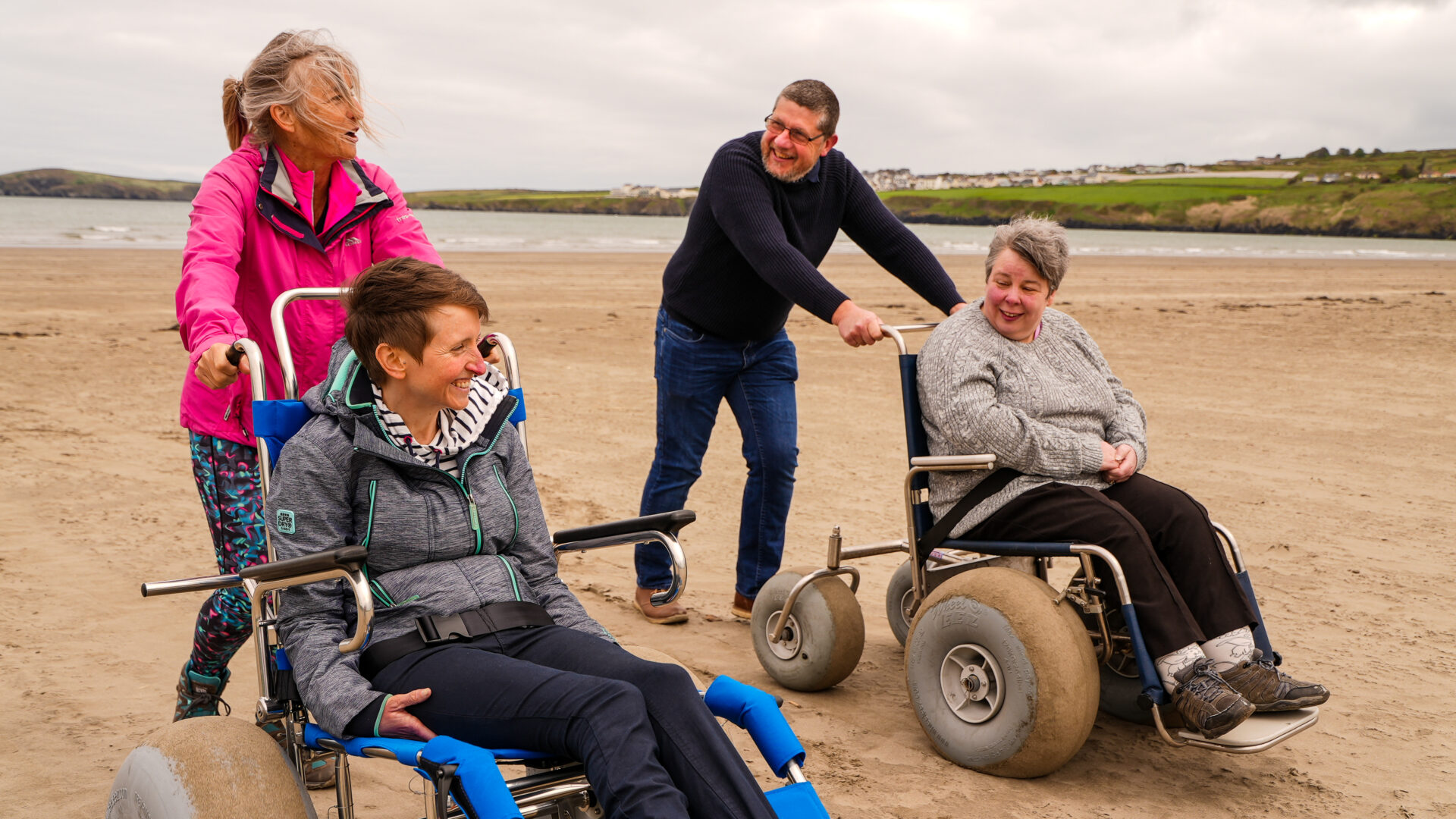
On a good day, the work happens almost invisibly. A family arrives in Saundersfoot, borrows a specially designed beach wheelchair, and someone who could not cross the soft sand is suddenly part of the beach again. They are not doing anything dramatic. They are doing what everyone else is doing: sitting by the sea, joining the conversation, watching children paddle, feeling the wind, and being in the photograph instead of waiting beyond the sand.
That is the kind of moment I think about whenever I check bookings, talk to host sites, or arrange equipment for the Outdoor Mobility Scheme. My job is to help make the Pembrokeshire Coast physically possible for more people, using beach wheelchairs, all-terrain equipment, ramps, hoists, trackways, and other practical support. It is detailed, practical work, but its purpose is simple: helping people reach places and experiences that might otherwise be closed to them.
So the news that our beach wheelchair at Saundersfoot had been vandalised was upsetting in a way that went far beyond the repair bill. Two specialist tyres and an arm were taken, causing around £600 worth of damage. The tyres were later found washed up a few miles down the coast.
The detail about the tyre stayed with me. It was such a small, ugly image beside the scale of what the chair is there to do. People do not book this equipment because they want anything unusual. They book it because they want to be on the beach with their family. Sometimes that means a first paddle in twenty years. Sometimes it means one last afternoon beside the sea for someone receiving end-of-life care. In those circumstances, a missing tyre is not a nuisance. It can stand between a family and a day they will never have the chance to repeat.

That is the reality behind a service that can sound, on paper, fairly technical. We talk about beach wheelchairs, all-terrain equipment, trackways, hoists, ramps, and hearing loops, but each one exists because a particular barrier has stopped someone taking part. It might be soft sand, uneven ground, or a transfer that cannot be made safely. Without this support, someone is left missing from the middle of a family walk, a beach day, or a group activity. The equipment is practical, but its purpose is deeply human.
Keeping that purpose alive is not something I do alone. The scheme started 20 years ago through the fundraising of local community groups and has since been supported by Welsh Government and business donations. What has made it grow in recent years is the support around it: cafés and activity centres willing to host equipment, local businesses that help look after chairs between bookings, and members of the public who donate money or mobility aids, often in memory of someone who loved the coast.
That support became very visible after the vandalism. The Pembrokeshire Coast Charitable Trust launched a fundraising appeal, giving people a way to help repair the Saundersfoot chair and support the wider scheme. The £600 will repair one chair, but the wider appeal is about making sure the whole scheme is stronger than it was before the damage happened. Some equipment is wearing out, and some busy sites need better storage. In this work, those details are never just details. A chair in good condition, kept safely and available in the right place, can decide whether a family day on the beach happens at all.
That is why the response to one damaged chair matters beyond Saundersfoot.
For many of us, the beach asks very little. We walk onto it without having to explain ourselves, plan around barriers, or wonder whether we will be able to join everyone else. That is the ordinary freedom this scheme tries to protect. The appeal remains open for anyone who would like to help keep that possible, with donations managed through the Pembrokeshire Coast Charitable Trust’s JustGiving page at https://www.justgiving.com/campaign/pembrokeshirebeachwheelchairs.
👻 Strange sights and spooky stories await in the @Southdownsnp
From mist-shrouded woods and twisted trees to castles beneath the moon, the National Park is home to many eerie spots.
And across our 15 National Parks, there are tales that have endured for centuries, legends still passed down today, and histories with dark chapters.
📸
Ghost in South Downs - Luis Fernando Mancilla
Iping tree - Richard Murray
Harvest moon - Andrew Gambling Photography
Devil’s Dyke - Sam Moore
Stamner Park - Finn Curry
#SouthDowns #Halloween #NationalParks


🎉 Happy Exmoor Day, @exmoornp!
Today, Exmoor National Park celebrates years of connecting people with nature, wildlife and the great outdoors.
From England’s largest wild red deer herd and native ponies to Europe’s first International Dark Sky Reserve and dramatic landscapes, Exmoor is a place full of life, history and discovery.
Its landscapes, wildlife and historic villages bring people closer to nature and create opportunities to explore, connect and enjoy the benefits of being outdoors.
Here’s to Exmoor – and many more adventures to come! 💚
#Exmoor #ExmoorNationalPark #NationalParksUK

Happy birthday @parc_eryri 🎂
From its towering peaks and sweeping valleys to its rich heritage, Eryri (Snowdonia) is a place that means so much to so many people.
It`s a landscape full of stories, shaped by generations of people and home to some of Wales` most treasured places, from the summit of Yr Wyddfa to the quieter corners.
Today, we`re celebrating everything that makes Eryri unique, from the people and traditions that give it its character to the ongoing work to protect its landscapes and wildlife.
Share your favourite memories of Eryri in the comments! 💬
📸Ogwen Valley, Snowdonia @cinqueportsphotography
#Eryri #EryriNationalPark #TheAnswerIsNationalParks

Autumn is a chance to give nature a helping hand. 🍂
From leaving fallen leaves to providing food for birds, small actions can make a big difference to the world around us.
Here are some of the ways to help nature this season.
#NatureRecovery #Autumn #NationalParks

An ancient wall almost 2,000 years old, and a catch-up with your mate? ✅
Historic landmarks like Hadrian’s Wall in Northumberland National Park have been connecting people for centuries.
While that connection looks very different today from the wall’s original role as a Roman defensive fortification, it’s still a place where people come together and explore history.
Because our National Parks are about so much more than great places for a day out. They’re places to connect with friends, clear your head, get active and learn about history, all in one place.
#Northumberland #HadriansWall #NationalParksUK

They’re more than just pretty places. 🌳
Our National Parks are home to some incredible trees, from ancient giants to England’s tallest tree.
Swipe through for a few #WildFacts about the trees growing across our 15 National Parks.
#NationalParksUK #Trees #Woodland

National Parks are places where animals make their homes, people catch up over coffee, and we pause to marvel at the dark skies above.
Places to connect, discover and look a little closer.
We’d love to see your images of autumn in action in a National Park. Tag us or use the hashtag #AutumnInAction 🧡
#NationalParks #Autumn

What if Middle-earth’s Rangers had more in common with National Park Rangers than we might think?
Of course, our National Park Rangers have a little less to worry about than Aragorn and his fellow Rangers.
But they do both know their landscapes well, protect the places they love and guide others to find their way.
Across the UK’s 15 National Parks, our Rangers are taking action every day. They may not be defending the Shire from the forces of darkness, but they certainly do an incredibly important job. 💚
#MiddleEarth #Rangers #NationalParksUK
