LookWild: Rare fungus arrives in the New Forest for the first time
-
Date posted: 25/11/2025
-
Time to read: 4 mins
The New Forest National Park is one of Britain’s most important strongholds for rare and endangered fungi – and a rare species once thought extinct in the UK has just been found in this ancient landscape for the first time.
The New Forest is home to an estimated 2,700 species of fungi, making it one of Britain’s richest areas for fungal diversity – it contains about a quarter of the UK total of around 12,000 species.
It also serves as a stronghold for many rare and endangered fungi. Some species are even still being discovered that are new to science, highlighting that even in southern England there remain ‘unmapped’ areas of natural knowledge still to be fully explored.
Now, this ancient landscape – with its intermingled mosaic of woodland, heathland, marshland and coastline – appears to have become even more significant as a haven for fungi. This autumn, a nationally rare fungus has been recorded in several parts of the Forest for the first time.
A remarkable discovery
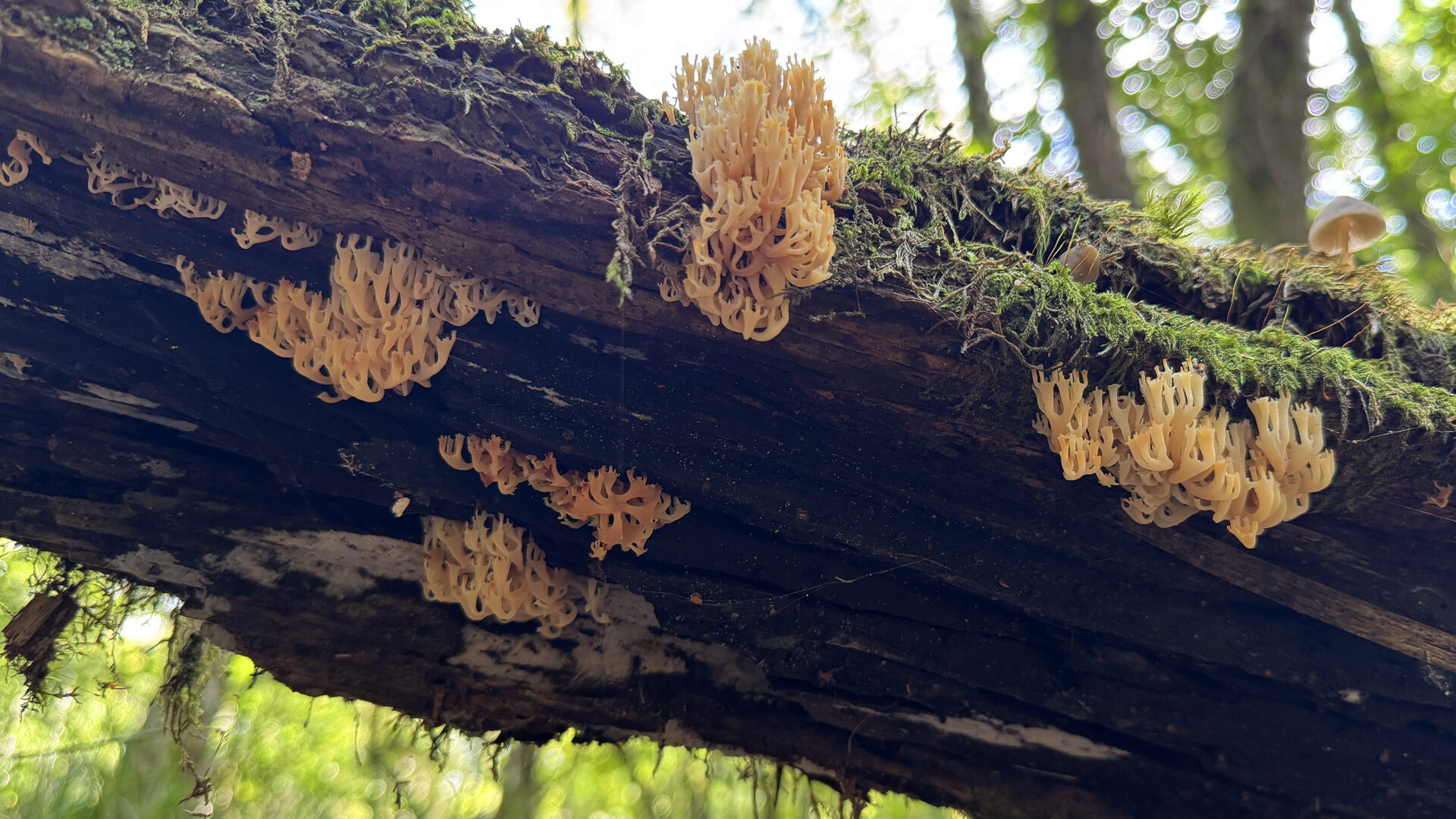
The elegant Candelabra Coral – Artomyces pyxidatus – is notable for its distinctive appearance thanks to its crown-tipped creamy white branches resembling a candelabra.

Candelabra Coral is typically found on decaying deadwood, such as rotting beech and silver birch logs, and thrives in moist woodland environments.
The fungus, which can grow up to 10cm high, was thought to be extinct in the UK, with no records during the 20th century.
However, it was rediscovered in Suffolk in 2012, and in the last five years it has been recorded in at least 10 English counties.
One of the discoveries of the fungus in the New Forest this autumn was made by Professor Russell Wynn, Director of Wild New Forest, at a site that is part of the Species Survival Fund (SSF) project, which is led by the New Forest National Park Authority.
“The sudden arrival of the Candelabra Coral this autumn is remarkable,” he said.
“We are already aware of at least six sites where it has been found in recent weeks. Given it is a relatively distinctive and identifiable species, it is unlikely that it would have been overlooked in the past.
“The arrival in the New Forest also parallels similar first appearances elsewhere in southern England, although the exact drivers are unclear.”
Boosting nature in the New Forest
SSF is a collaborative project involving five partner organisations working to protect and expand habitats from the Forest’s inner core to its outer edges and beyond, restoring land equivalent to 350 football pitches for nature.
The £1.3million scheme has seen wildflower meadows planted, ponds created, and heathlands and woodlands restored to allow a whole variety of species to thrive.
Wild New Forest has been carrying out wildlife surveys to generate a biodiversity baseline and identify priority species at different sites before work took place.

Russ said: “The New Forest National Park is a national biodiversity hotspot with an estimated 20,000 species of animal, plant and fungus. Fungi are an important part of the ecosystem, so we ask people to look but don’t pick and leave fungi for wildlife and other people to enjoy.”
Wild New Forest is one of the five partner organisations working on the conservation project alongside Amphibian and Reptile Conservation, Freshwater Habitats Trust, Hampshire and Isle of Wight Wildlife Trust, and New Forest Commoners’ Defence Association.
The project is funded by the Government’s Species Survival Fund. The fund was developed by Defra and its Arm’s-Length Bodies. It is being delivered by The National Lottery Heritage Fund in partnership with Natural England and the Environment Agency.
Has the rain reached you yet? 🌧️
A change in the weather is making its way across our National Parks. And with it comes a different rhythm to the landscape - changing how our surroundings look, sound and feel.
The sound of rain. The smell of wet earth. The air feeling fresher. Wildlife finding shelter.
What do you notice most when the rain arrives?
#RainyDay #BritishWeather #NationalParksUK


They may look like windmills, but in The Broads National Park, they are actually windpumps.
Rather than grinding flour, they were built to pump water from the marshes, helping to drain the land for agriculture and grazing.
Today, these distinctive structures are part of what makes the Broads landscape so recognisable.
And while this is a story from the Broads, it’s one that can be found across all 15 of our National Parks - landscapes shaped by people finding ways to adapt to live and work within their landscape. Something which still remains the case today.
Did you know that one of these mills is said to be haunted? Comment down below which one you think it is 👇
In photograph order:
📍1. St Benets Mill
📍2. Horsey Mill
📍3. Turf Fen Mill
📍4. Thurne Mill
📍5. Bograve Mill
#NorfolkBroads #NationalPark #Windpumps

✨🌙 Look up!
With a partial solar eclipse taking place tonight across the UK, we’re reminded about how important it is for our dark skies to be protected. Our National Parks are home to some of the best places in the UK to enjoy them, due to low levels of light pollution.
These incredible photos capture another recent celestial phenomenon that has been on display for stargazers and is peaking tonight - the Perseid meteor shower.
The sightings were captured in @northyorkmoors - home to one of the UK’s largest areas of protected dark sky.
🌟Tag us in your eclipse photos across our National Parks. Just be sure to follow safe viewing and photography guidance while you snap!
📷 1. Perseid meteor shower at Skelton Tower by Richard Horsman.
📷 2. Milky Way and Perseid meteor shower at Sutton Bank by Russ Norman.
📍North York Moors National Park #DarkSkies #SolarEclipse #Perseid #MeteorShower

Just goats being goats. 🐐
These incredible animals call the Valley of Rocks in @exmoornp home - scaling walls and cliffs, grazing on the rich meadows and, occasionally, blocking the roads!
They’re a wonderful reminder of why our National Parks are so important, providing a home for such a diverse range of wildlife.
Have you ever spotted one?
📷 Exmoor National Park
#ValleyOfRocks #Exmoor #Goats #NationalPark

Look out for us at the cinema. 🎬🌳
Our latest Wild Spaces episode, screening before selected films, takes you to Northumberland National Park. Their team, alongside farmers, landowners and volunteers, is working together to create healthier, more resilient landscapes through woodland creation and hedgerow planting.
It’s a story of partnership, long-term thinking, and the small actions that can have a lasting impact.
Find out more about the project and watch the episode via the link in our bio. 🔗
@northumberlandnationalpark
#WildSpaces #Northumberland #TreePlanting

💭You might have heard of peatland, but what exactly is it and why does it matter so much?
Peatlands are our natural climate allies. They store vast amounts of carbon, support rare wildlife, improve water quality, reduce flood risk and preserve thousands of years of archaeological and cultural history.
Some of the UK`s most important peatlands are found within our National Parks, making them critical places for tackling the climate and nature crises.
Across the UK`s National Parks, peatland restoration projects are helping damaged peatlands recover, benefiting both nature and people.
📍Dartmoor National Park
#NationalParks #Peatlands #NatureRecovery

Our National Parks tell the stories of the people and places that came before us.
A new Joint Statement on the Historic Environment in the National Parks of England, Scotland and Wales has launched.
Bringing together the 15 National Parks and heritage partners, the statement sets out a shared commitment to protecting the historic places and features that help shape our landscapes.
From ancient monuments and archaeological sites to historic buildings and traces of past generations, our National Parks are home to thousands of years of history.
Together, we’re working to care for these special places so their stories can continue to be discovered, valued and enjoyed for generations to come.
Read the full statement via the link in our bio 🔗
#NationalParks #UKHistory #Heritage

Hello, August. 💚
Some habits we’re holding on to this month, for our National Parks and for ourselves.
Little changes can have a lasting impact when it comes to caring for our 15 special places.
What will you be taking into August?
#UKNationalParks #UKOutdoors
