
How Northumberland National Park is protecting the curlew
-
Date posted: 23/04/2026
-
Time to read: 4 mins
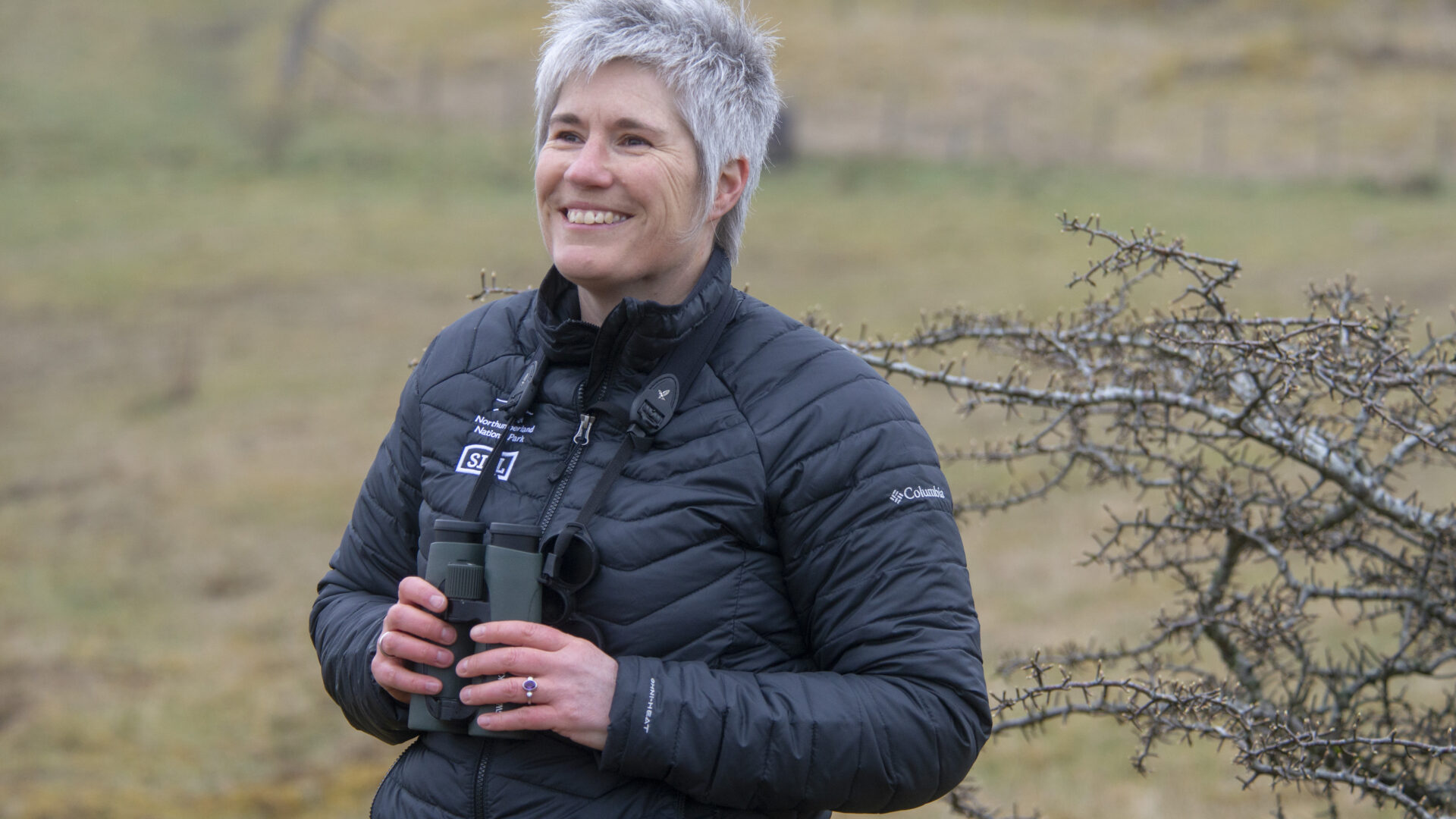
Britain’s curlews populations are in worrying decline – but Northumberland National Park still supports good numbers. Ecologist Gill Thompson gives us a glimpse into the National Park’s work to protect this beautiful bird.
I grew up in the Lake District swimming, boating, fishing and walking, so was outside a lot enjoying what makes the National Park a wonderful place to be.
I studied biology and ecology and after jobs with a Wildlife Trust and a consultancy I started working for Northumberland National Park. I have worked here for over 26 years so I must like it!
It is a real privilege to get the chance to experience the National Park in all seasons and see changes over time. My favourite view or experience is usually the one that has just happened, which means there is always something to look forward to.
As the ecologist of Northumberland National Park, I feel it is an honour, but also a pressure to have the curlew as our emblem.
A day in the life of an ecologist
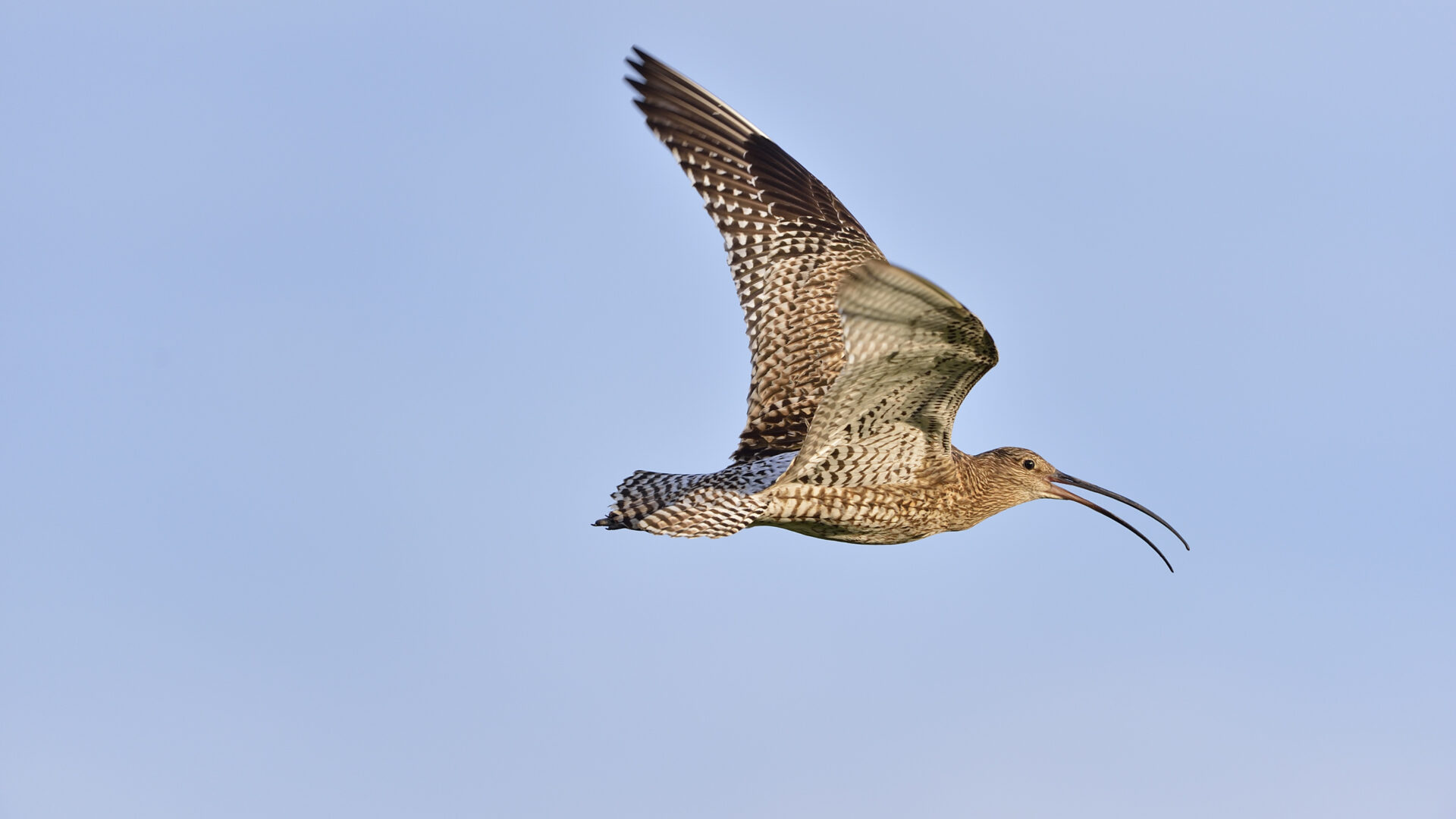
Curlews – most commonly the Eurasian curlew (Numenius arquata) – are the UK’s largest wading birds. They are instantly recognisable by their long legs, mottled brown plumage and distinctive down-curved bill, which they use to probe deep into soft ground for food like worms, insects and larvae.
Their watery, bubbling call is one of the most evocative sounds of the British uplands and wetlands and a goosebump-raising sign of the arrival of spring. There is real joy for me when I see and hear the first ones returning
Nationally they have, however, been declining in numbers – 48% across the UK since the mid-90s. The northern protected landscapes including Northumberland National Park still support good numbers, but it is our responsibility to keep them here.
Every year I survey areas of the National Park for waders including curlews and they are some of the most memorable days I have had at work. The days start early leaving the house around 5.30-6am travelling to a moorland site to walk a transect listening and watching for birds. Some of my favourite locations are the Cheviot fringe above Alwinton (including a hill called Gill’s Law), north of Hadrian’s Wall and edge of Harthope Valley.
The early morning sun on my skin, surrounded by the sounds of skylark, meadow pipit, curlew, snipe, oystercatcher and lapwing in the tranquil landscape is such a peaceful and calm experience.
Other creatures such as hares, stoats and foxes sometimes make an appearance, with voles, lizards and the occasional adder darting from under foot. The sounds of cuckoo, willow warbler and redstart drift from nearby woodland and scrub.
When I return to car and the office I often feel like I was in a little world of my own.
On the ground: how the Northumberland National Park is protecting curlew
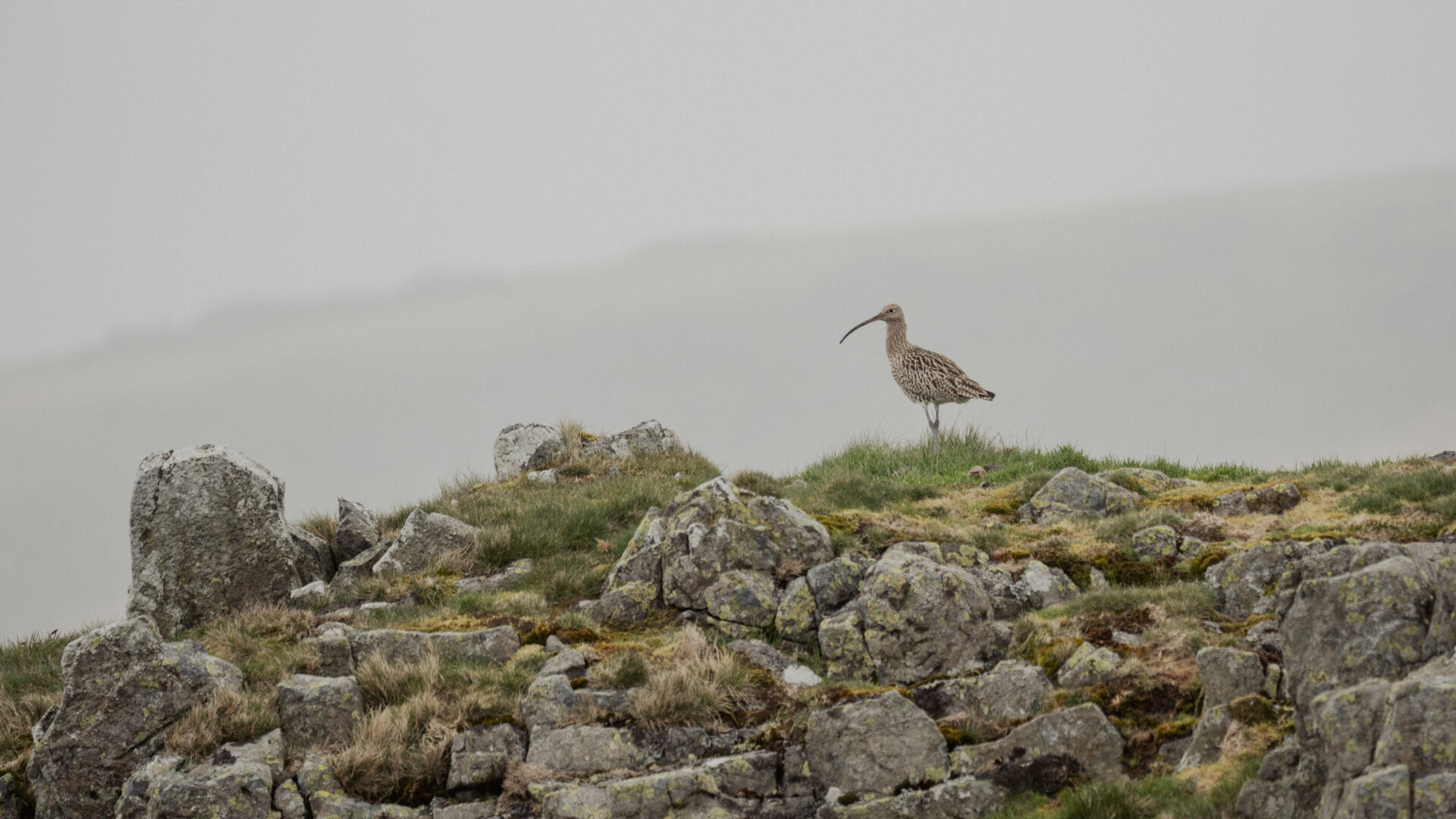
During the breeding season, curlews favour open landscapes like moorland, rough grassland and farmland, where they nest directly on the ground in shallow scrapes lined with vegetation.
This ground-nesting strategy makes them particularly vulnerable to disturbance and predation, as well as to changes in land use. Because their breeding success depends on a delicate balance of habitat quality, low disturbance and predator pressure, curlew populations are especially sensitive to environmental change.
My work forms part of a wider range of actions the National Park is taking to protect curlew and wider biodiversity across the landscape as a whole.
Restoring and managing key habitats like moorland, grassland, and wetlands to improve conditions for the birds to feed and breed.
Working with farmers and landowners to encourage curlew-friendly land management
Conducting regular population surveys to monitor numbers and trends
Mapping and identifying important breeding sites for targeted protection.
Protecting nests to reduce egg and chick loss.
Supporting wider strategies that benefit curlew alongside other upland birds and wider biodiversity.
Collaborating with conservation organisations like the RSPB, Wildlife Trusts and other local partners.
Raising public awareness about threats like disturbance – especially from dogs – and habitat loss.
With continued care, collaboration and understanding, we can continue to have hope that the curlew’s call will remain a defining sound of these uplands for generations to come.
Find out more about what Northumberland National Park Authority, local people and partners are doing to preserve the park’s ecology and biodiversity here.
The clocks go back on Sunday, which means more darkness. ⏰ ⭐
But darkness isn’t always a bad thing. Darker nights bring many benefits for our natural environment, supporting wildlife and helping nature thrive.
Stargazing beneath our dark skies also connects us to centuries of traditions and our enduring fascination with the stars. ✨
Our National Parks are home to some of the darkest skies in the UK. By protecting these special places, we can help preserve the dark skies that benefit both people and nature.
#DarkSkies #NationalParks #ClocksGoBack


👻 Strange sights and spooky stories await in the @Southdownsnp
From mist-shrouded woods and twisted trees to castles beneath the moon, the National Park is home to many eerie spots.
And across our 15 National Parks, there are tales that have endured for centuries, legends still passed down today, and histories with dark chapters.
📸
Ghost in South Downs - Luis Fernando Mancilla
Iping tree - Richard Murray
Harvest moon - Andrew Gambling Photography
Devil’s Dyke - Sam Moore
Stamner Park - Finn Curry
#SouthDowns #Halloween #NationalParks

🎉 Happy Exmoor Day, @exmoornp!
Today, Exmoor National Park celebrates years of connecting people with nature, wildlife and the great outdoors.
From England’s largest wild red deer herd and native ponies to Europe’s first International Dark Sky Reserve and dramatic landscapes, Exmoor is a place full of life, history and discovery.
Its landscapes, wildlife and historic villages bring people closer to nature and create opportunities to explore, connect and enjoy the benefits of being outdoors.
Here’s to Exmoor – and many more adventures to come! 💚
#Exmoor #ExmoorNationalPark #NationalParksUK

Happy birthday @parc_eryri 🎂
From its towering peaks and sweeping valleys to its rich heritage, Eryri (Snowdonia) is a place that means so much to so many people.
It`s a landscape full of stories, shaped by generations of people and home to some of Wales` most treasured places, from the summit of Yr Wyddfa to the quieter corners.
Today, we`re celebrating everything that makes Eryri unique, from the people and traditions that give it its character to the ongoing work to protect its landscapes and wildlife.
Share your favourite memories of Eryri in the comments! 💬
📸Ogwen Valley, Snowdonia @cinqueportsphotography
#Eryri #EryriNationalPark #TheAnswerIsNationalParks

Autumn is a chance to give nature a helping hand. 🍂
From leaving fallen leaves to providing food for birds, small actions can make a big difference to the world around us.
Here are some of the ways to help nature this season.
#NatureRecovery #Autumn #NationalParks

An ancient wall almost 2,000 years old, and a catch-up with your mate? ✅
Historic landmarks like Hadrian’s Wall in Northumberland National Park have been connecting people for centuries.
While that connection looks very different today from the wall’s original role as a Roman defensive fortification, it’s still a place where people come together and explore history.
Because our National Parks are about so much more than great places for a day out. They’re places to connect with friends, clear your head, get active and learn about history, all in one place.
#Northumberland #HadriansWall #NationalParksUK

They’re more than just pretty places. 🌳
Our National Parks are home to some incredible trees, from ancient giants to England’s tallest tree.
Swipe through for a few #WildFacts about the trees growing across our 15 National Parks.
#NationalParksUK #Trees #Woodland

National Parks are places where animals make their homes, people catch up over coffee, and we pause to marvel at the dark skies above.
Places to connect, discover and look a little closer.
We’d love to see your images of autumn in action in a National Park. Tag us or use the hashtag #AutumnInAction 🧡
#NationalParks #Autumn
