
Lake District National Park
Discover. Explore. Inspire
Ice and fire carved the highest mountains and deepest lakes. Humans brought life and love. Welcome to the Lake District.
Step into the National Park and UNESCO World Heritage Site to discover spectacular landscapes, pretty villages, a warm welcome and a rich cultural heritage. Explore the fells, splash about on the lakes, take a wild adventure or simply enjoy the peace. Breathe in and be inspired.
Get inspired

Paddleboarding , Activity
A fantastic way to get active on one of the many lakes. Hire a board from Brockhole and we’ll show you how to get started.
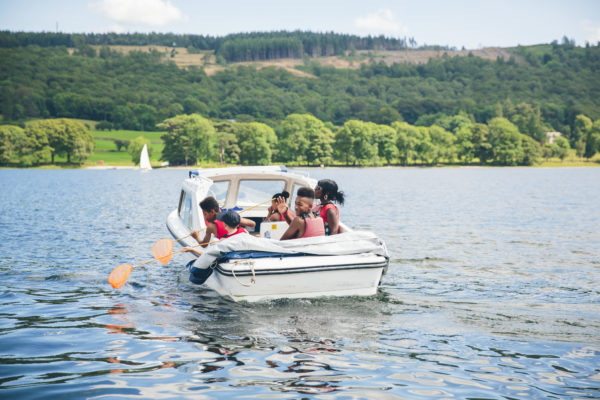
Boating , Activity
Whether you’re a rower or a relaxer, exploring the scenery by boat is a perfect way to create memorable moments. Hire boats from Coniston or Derwent Water.

Walking , Activity
Our mountains are called fells and we have hundreds of them for you to walk up, run across or simply gaze at their majesty – there’s something for everyone. Prepare for winter walking, with our Winter Skills courses.

Special qualities
Lake District National Park is famous for its stunning scenery, abundant wildlife and cultural heritage. Its special qualities include
Cool, clear lakes, tarns and rivers – nationally important stretches of water for their range of habitats, and species such as vendace, charr, crayfish and schelly. The lakes and tarns give the Lake District a quality of scenery found nowhere else in England.
Ancient woodlands – the semi-natural woodlands add texture, colour and variety to the landscape and also provide a home for native animals and plants. The high rainfall in the core of the National Park favours woodlands rich in Atlantic mosses and liverworts, ferns and lichen. The presence of wood pasture, pollards and old coppice woodland form part of the rich cultural heritage of the National Park.
Diverse landscape – the area’s imposing natural landforms are overlaid by thousands of years of human activity. The mix of lakes, farmland, fells, woodland and settlement gives each valley a visual and cultural distinctiveness of its own.
Wealth of wildlife – the Lake District is unique in England for its abundant and varied freshwater habitats. Key habitats include mires, limestone pavement, upland heath, screes and arctic-alpine communities, lakeshore wetlands, estuary, coastal heath and dunes.
Opportunities to enjoy outdoor activities – the national park has the highest concentration of outdoor activity centres in the UK. It is the birthplace of British mountaineering and there is a tradition of unrestricted access to the fells, plus an extensive network of public rights of way. Recreational walking can be traced from Wordsworth’s ‘Guide to the Lakes’ to the guides of more recent writers such as Wainwright.
Open nature of the fells and tranquillity of valleys and lakes – the relatively open character of the uplands, and the lack of modern development, is especially important. To walk freely across the fells, or climb their crags, is liberating and gives a feeling of wildness. To many, the Lake District is a place where it is possible to feel remote, yet know the nearest settlement is never far away.
Complex geology – the Lake District’s rocks provide a dramatic record of nearly 500 million years, with evidence of colliding continents, deep oceans, tropical seas, and kilometre-thick ice sheets. The area has the largest and deepest lakes and highest peaks in England. Its rock sequence contributes to our understanding of past climates.
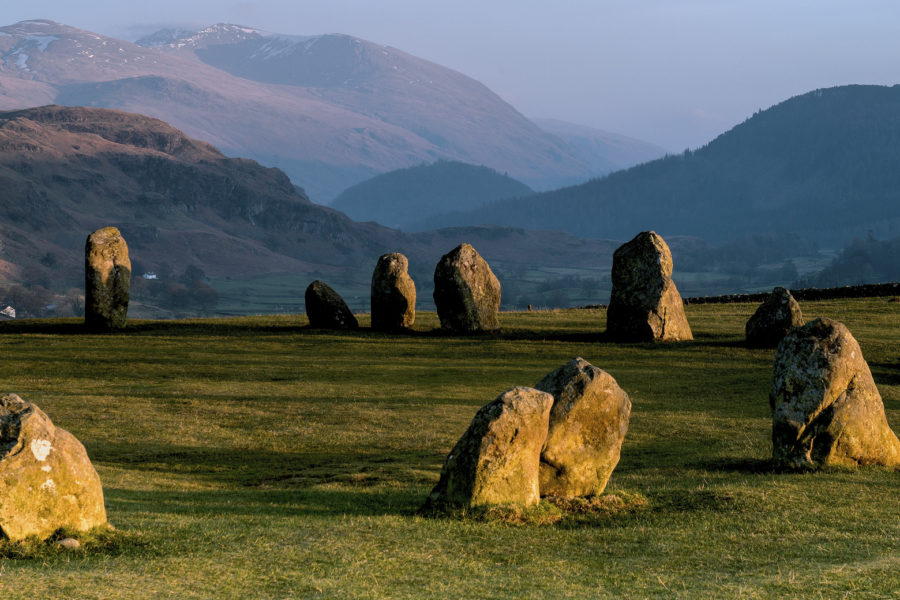
Rich archaeology – there have been people in the Lake District since the end of the last Ice Age. The landscape reflects a long history of settlement with many traces of prehistoric and medieval field systems. Internationally important archaeological monuments include stone circles, Roman roads and forts, and charcoal blast furnaces. The high rainfall has assisted water power as a prime source of energy for mining, gunpowder and wood-processing industries.
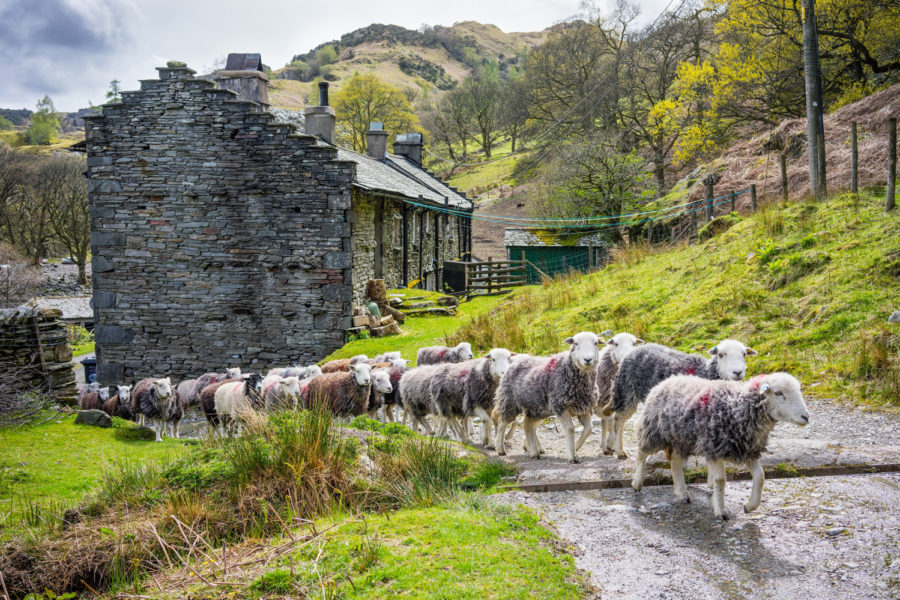
Distinctive settlement character- local materials, including types of slate, are a common link between contrasting styles of architecture. Finishes such as lime wash, and the use of sandstone, granite and limestone add variety. Dry stone walls and hedgerows form a visual and historic link between settlement and countryside. Chimneys, windows and walling, and structures such as hogg houses, peat houses, packhorse bridges and bank barns reflect local building practices.
Celebrated cultural traditions – Lake District locals have worked the land – the Lake District has the largest concentration of common land in Britain, and possibly Western Europe – and helped shape the landscape. Writers and environmentalists have campaigned for landscape protection. Artists and writers such as Turner, Heaton Cooper, Kurt Schwitters, Wordsworth, Coleridge and De Quincey have gained inspiration from the area, as well as children’s authors Arthur Ransome and Beatrix Potter. The area also has its own dialects and distinctive sports such as hound trailing, fell running, and Cumberland and Westmorland wrestling.
Did you know?


A world-famous park
In 2017 the Lake District National Park joined the Taj Mahal, the Grand Canyon and Machu Picchu as a UNESCO World Heritage Site. As a ‘cultural landscape’, the world-class designation recognised the National Park as a dramatic farmed landscape, inspiring people to love and appreciate the place, leading to the birth of the global conservation movement. These three themes: identity, inspiration and conservation also shape the future of the Park. From the 25 partner organisations who work together to help manage the Park, to everyone who visits, works in and looks after this special corner of England – we all have a role to play in looking after this unique place.
See you soon!
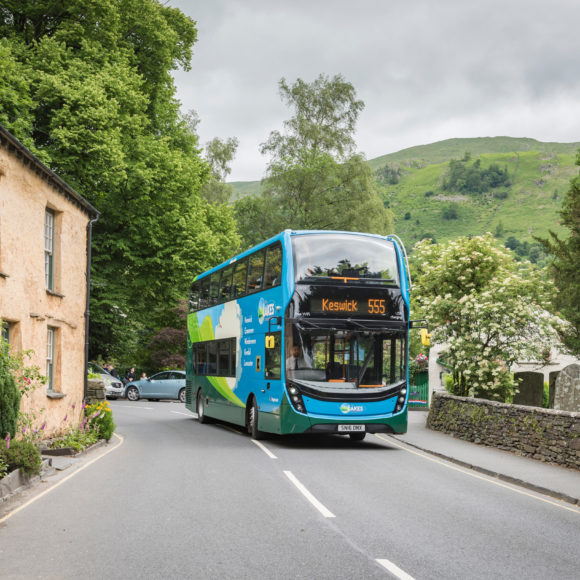
Help us look after this special place by cutting the carbon and travelling to and around the Lake District sustainably. Hop on a bus (open-top if it’s dry!), take a train, hire a bike (or e-bike!), sail away on a boat or car-share – it all helps, and is a fantastic way to take in the views! And if you do need to drive, explore somewhere new be sure to plan your journey in advance and use the Lake District National Park Guide.
It’s not every day you get to see one of our National Parks in biscuit form on @britishbakeoff!
Last night, The Great British Bake Off contestant @itsdoctoryan created a beautiful biscuit mosaic inspired by the Broads National Park, perfectly capturing the view at St Benet’s Mill, Thurne.
And it wasn’t just a feast for the eyes as the mosaic was made using treacle and ginger, honey and lemon, cocoa and malted milk, and pistachio biscuits.
Two great things combined: a beautiful National Park view and delicious biscuits. What could be better than that? 💚
Photo: Channel 4
#GBBO #BakeOff #NorfolkBroads @broadsnationalpark


You’ve likely heard of one - but what does it actually do?
Our 15 Parks wouldn’t be able to function without the authorities working behind the scenes to keep them running.
And each authority relies on people. People within the community, volunteers, staff and members. People that run businesses, or partner as organisations. People that are skilled and knowledgeable in a variety of areas from wildlife to accessibility.
Our National Parks are full of people and action, and it’s the Authorities that bring them all together.
💚
#NationalParksUK #NationalParkAuthorities

The Yorkshire Dales has one of the highest concentrations of caves and caverns of any of our 15 National Parks - a whole landscape hiding beneath the ground.
Our National Parks don’t just protect and preserve the landscapes we see every day. They also help care for historic and unique places discovered by our ancestors, like Ingleborough Cave and Gaping Gill, both of which were shrouded in myth and legend until they were explored by Victorians in the 1800s.
There’s so much more to our National Parks than meets the eye and sometimes, quite literally beneath the surface 👀
#YorkshireDales #GapingGill #Ingleborough

A week on from National Parks UK’s Big Volunteer Weekend, we’re still celebrating the people who make a difference across our National Parks.
Last weekend, hundreds of people came together across all 15 National Parks to give their time, share their skills and support our landscapes.
But volunteering in our National Parks doesn’t happen just one weekend a year. All year round, volunteers play an incredible variety of roles – from leading guided walks and supporting education, to conservation, planting and caring for our landscapes.
Every volunteer makes a valuable contribution to protecting our natural and cultural heritage. We simply couldn’t do what we do without you. 💚
So, to all our volunteers: thank you for your time, energy, enthusiasm and everything you bring to our National Parks.
If you know someone who volunteers in a National Park, help us spread the thanks by sharing this post. 🌿
#Volunteers #NationalParks #NationalParksUK

Mae’r Bele yn un o famaliaid prinnaf Cymru, ond mae eu niferoedd yn tyfu yn raddol. Mae hynny’n newyddion da i’n coetiroedd ac i’r Parciau Cenedlaethol, sy’n darparu rhai o’r cynefinoedd pwysicaf ar gyfer bywyd gwyllt ledled Cymru a Phrydain.
Ym Mannau Brycheiniog, mae’r prosiect adfer wedi gosod blychau nythu yn y coed, ac mae gwaith monitro wedi nodi presenoldeb y Bele, gan gynnwys grwpiau teuluol. Mae’r ffilm arbennig hon yn dangos un ohonynt ar waith. 🐾
Mae’n atgof hyfryd o’r hyn sy’n bosibl pan ddaw coetiroedd iach a gwaith cadwraeth arbenigol at ei gilydd i roi’r gofod sydd ei angen ar rywogaethau prin i wella.
Pine Martens are one of Wales’ rarest mammals, but they’re slowly making a comeback. That’s good news for our woodlands, and for National Parks, which provide some of the most important habitats for wildlife across Wales and Britain.
In Bannau Brycheiniog (the Brecon Beacons), the recovery project has installed treetop den boxes, with monitoring identifying pine martens, including family groups. This special footage shows one in action. 🐾
It’s a lovely reminder of what can happen when healthy woodlands and specialist conservation work come together to give rare species the space they need to recover.
#BreconBeacons #BannauBrycheiniog #PineMartins #Wales

It’s the Autumn Equinox 🍂
Our National Parks are always changing in time with the rhythm of nature, but this becomes particularly noticeable when autumn arrives.
Deer begin to rut, spiders’ cobwebs glisten in the fresh light, fungi become more prominent, and leaves begin to change colour.
What changes have you noticed so far? 🧡
#Autumn #AutumnEquinox #NationalParks

“You look after the National Park not for yourself, but for people who are coming, the ones who are following you.”
These are the words of Ron Wood, who has been volunteering for the Lake District National Park for over 60 years. His story reflects the vital role volunteering plays across our National Parks: keeping them thriving, communities invested, and people connected to and caring for our landscapes.
Over the decades, Ron’s incredible journey has seen him remain steadfast in his commitment through droughts, hand, foot and mouth disease, and the ever-changing rhythms of nature. Through it all, one thing has remained constant: his dedication to looking after the environment for those who come after him.
You can read Ron`s full story by clicking the link in our bio or learn more about volunteering at nationalparks.uk/volunteering 🔗
📸Photos by @lakedistrictnpa
#LakeDistrict #Volunteering #NationalParks

A quiet autumn transformation is beginning to take place. 🍁
Bracken gradually fades to burnt oranges. Mist sweeps across the horizon. Grasses brown and trees begin their annual shaking of leaves.
Our National Parks are never still. They are constantly changing and transforming with the seasons - a living rhythm of growth, decay, colour and renewal.
These four photographs perfectly capture our Parks on the cusp of autumn 📸
1. Dartmoor @ryanbrowningphotography
2. Lake District @jonny.gios
3. New Forest @acornsandscapes
4. Northumberland @calbrownphoto
#Autumn #NationalParksUK
