
Pembrokeshire Coast National Park
A Wonder Filled Coast
The Pembrokeshire Coast isn’t what you might expect from a National Park. It’s split into four parts, each one with its own quirks and charms.
It’s one of the smallest of the UK’s National Parks but don’t let the size fool you, you’re at the gateway to a range of stunning landscapes. The quality coastline is backed by hills, estuaries, valleys and woodlands just waiting to be discovered.
Key activities

A Walking Wonderland , Activity
With over 600 miles of public footpaths and bridleways, walking is an ideal way to discover the Pembrokeshire Coast’s scenery, wildlife and history.

Wildlife Watching , Activity
Explore the amazing wildlife that makes its home on the Pembrokeshire Coast - not forgetting the exciting array of seasonal wildlife which also visits year after year.

Miles of Golden Sands , Activity
Britain's only truly coastal National Park boasts a variety of beaches. Some are easy to reach and ideal for families, others are less accessible but offer peace and quiet.

Special qualities
5 reasons why the Pembrokeshire Coast is a special place
The Pembrokeshire Coast is the only UK National Park which is primarily designated for its coastal landscape.
It’s one of the smallest UK National Parks, but has one of the most diverse landscapes, covering almost all the Pembrokeshire Coast, every offshore island, the Daugleddau estuary and large areas of the Preseli Hills and the Gwaun Valley.
It’s home to the Pembrokeshire Coast Path National Trail – a spectacular 186 mile (299 km) long National Trail covering some of the most varied coastal scenery in Britain.
It is ecologically one of the richest and most diverse parts of Wales and is recognised as of international importance for a wide range of high quality habitats and rare species.
The Park has a rich cultural and built heritage, being home to 286 Scheduled Ancient Monuments and 1234 listed buildings.
Did you know?


The coast with the most
The Pembrokeshire Coast is the home of outdoor adventure for all, from high energy watersports to relaxing walks and wildlife watching, while there’s more to explore indoors if you want to escape the elements.
No visit is complete without a walk on the Pembrokeshire Coast Path, but you don’t have to be an experienced explorer to enjoy the route.
The Path passes all the area’s beautiful beaches, links with nearby footpaths and with some stretches accessible to wheelchair users and families with prams and pushchairs, it’s easier than ever to tick this off your bucket and spade list.
Walking the entire route is no mean feat – in fact, the total rise and fall of the Coast Path is over 35,000 feet – greater than the height of Mount Everest.
But there’s no rule to say you’ve got to walk it all. In fact, there are many different ways you can use the Path to discover the Park. You can reduce the route into a series of sections to suit your aims and ability.

Getting around
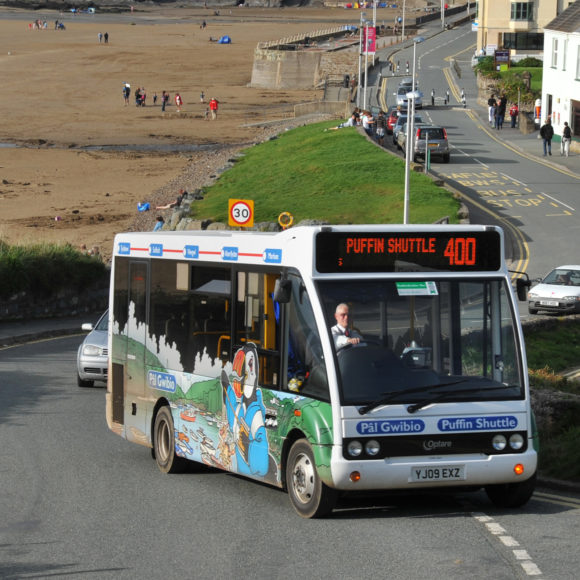
The Pembrokeshire Coastal Bus Services help locals and visitors get to the coast without having to use a car, travelling along the coast to provide access to walks, beaches, boat trips, local villages and attractions.
A week on from National Parks UK’s Big Volunteer Weekend, we’re still celebrating the people who make a difference across our National Parks.
Last weekend, hundreds of people came together across all 15 National Parks to give their time, share their skills and support our landscapes.
But volunteering in our National Parks doesn’t happen just one weekend a year. All year round, volunteers play an incredible variety of roles – from leading guided walks and supporting education, to conservation, planting and caring for our landscapes.
Every volunteer makes a valuable contribution to protecting our natural and cultural heritage. We simply couldn’t do what we do without you. 💚
So, to all our volunteers: thank you for your time, energy, enthusiasm and everything you bring to our National Parks.
If you know someone who volunteers in a National Park, help us spread the thanks by sharing this post. 🌿
#Volunteers #NationalParks #NationalParksUK


Mae’r Bele yn un o famaliaid prinnaf Cymru, ond mae eu niferoedd yn tyfu yn raddol. Mae hynny’n newyddion da i’n coetiroedd ac i’r Parciau Cenedlaethol, sy’n darparu rhai o’r cynefinoedd pwysicaf ar gyfer bywyd gwyllt ledled Cymru a Phrydain.
Ym Mannau Brycheiniog, mae’r prosiect adfer wedi gosod blychau nythu yn y coed, ac mae gwaith monitro wedi nodi presenoldeb y Bele, gan gynnwys grwpiau teuluol. Mae’r ffilm arbennig hon yn dangos un ohonynt ar waith. 🐾
Mae’n atgof hyfryd o’r hyn sy’n bosibl pan ddaw coetiroedd iach a gwaith cadwraeth arbenigol at ei gilydd i roi’r gofod sydd ei angen ar rywogaethau prin i wella.
Pine Martens are one of Wales’ rarest mammals, but they’re slowly making a comeback. That’s good news for our woodlands, and for National Parks, which provide some of the most important habitats for wildlife across Wales and Britain.
In Bannau Brycheiniog (the Brecon Beacons), the recovery project has installed treetop den boxes, with monitoring identifying pine martens, including family groups. This special footage shows one in action. 🐾
It’s a lovely reminder of what can happen when healthy woodlands and specialist conservation work come together to give rare species the space they need to recover.
#BreconBeacons #BannauBrycheiniog #PineMartins #Wales

It’s the Autumn Equinox 🍂
Our National Parks are always changing in time with the rhythm of nature, but this becomes particularly noticeable when autumn arrives.
Deer begin to rut, spiders’ cobwebs glisten in the fresh light, fungi become more prominent, and leaves begin to change colour.
What changes have you noticed so far? 🧡
#Autumn #AutumnEquinox #NationalParks

“You look after the National Park not for yourself, but for people who are coming, the ones who are following you.”
These are the words of Ron Wood, who has been volunteering for the Lake District National Park for over 60 years. His story reflects the vital role volunteering plays across our National Parks: keeping them thriving, communities invested, and people connected to and caring for our landscapes.
Over the decades, Ron’s incredible journey has seen him remain steadfast in his commitment through droughts, hand, foot and mouth disease, and the ever-changing rhythms of nature. Through it all, one thing has remained constant: his dedication to looking after the environment for those who come after him.
You can read Ron`s full story by clicking the link in our bio or learn more about volunteering at nationalparks.uk/volunteering 🔗
📸Photos by @lakedistrictnpa
#LakeDistrict #Volunteering #NationalParks

A quiet autumn transformation is beginning to take place. 🍁
Bracken gradually fades to burnt oranges. Mist sweeps across the horizon. Grasses brown and trees begin their annual shaking of leaves.
Our National Parks are never still. They are constantly changing and transforming with the seasons - a living rhythm of growth, decay, colour and renewal.
These four photographs perfectly capture our Parks on the cusp of autumn 📸
1. Dartmoor @ryanbrowningphotography
2. Lake District @jonny.gios
3. New Forest @acornsandscapes
4. Northumberland @calbrownphoto
#Autumn #NationalParksUK

🍄 They’re not just wonderfully weird – they’re vital for our National Parks, too. Fungi can be more prominent as we enter autumn, and across our landscapes they’re helping to protect the fragile environments our Parks depend on.
Our National Parks are home to over 80% of the UK’s priority conservation habitats, and every single bracket or tiny woodland fungus is part of a vital wider workforce that supports our ecosystems.
They can look small, but they’re certainly mighty.
#Fungus #UKFungi #Mycological #NationalParks

Autumn brings some unusual visitors to the @newforestnpa 🐷🍂
As the leaves turn and acorns begin to carpet the Forest floor, you might spot a few more snouts among the trees.
Each autumn, New Forest Commoners exercise an ancient right known as pannage – turning their pigs out to forage for fallen acorns, beech mast and other natural foods that might be harmful to other grazing animals.
It’s a tradition that has been part of life in the New Forest for many years. Just like many of our Parks, it shows how these landscapes are shaped by history and the unique ways of working that protect the environment.
📸This beautiful photograph was captured by @hang_ross76.
#NewForestPigs #Autumn #NewForest

🍂 Autumn is creeping in, and the nights are slowly drawing in around us. But darkness isn’t just something we notice. For countless bugs, it’s essential.
Two-thirds of invertebrates are partially or wholly nocturnal, relying on the natural rhythm of night and day to feed, move, reproduce and survive. Yet increasing light pollution is disrupting this vital nighttime world. 🐜
September is an active time for bugs - spiders seek shelter, wasp colonies reach their peak size, and many are migrating or laying overwintering eggs.
Our National Parks are home to some of the UK’s darkest skies and important habitats where we can protect the darkness that bugs depend on.
Together, we can help even the smallest of species to thrive.
Clips via @buglife_ict
1 & 2: Moth © Patrick Chadwick
3: Running Crab Spider © Patrick Chadwick
4: Millipede © Patrick Chadwick
5: Common glow-worm (Lampyris noctiluca) © Kristian Pikner
6 & 7: Ringlet butterfly roosting © Patrick Chadwick
8: Wasp © Patrick Chadwick
#BugLife #DarkSkies #NationalParks
